- Details
- Hits: 2968
| Walter Dugald MacPherson | ||
|
|
|
|
|
b. 30 Jun 1901 in London a solicitor d. 1991 |
||
- Details
- Hits: 3055
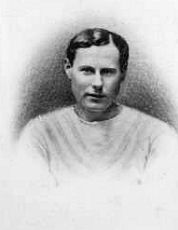
| Flt-Lt R P P Pope | ||
|
|
|
|
|
Chief Instructor with Air Service Training |
||
- Details
- Hits: 3161
| Lt Patrick Randolph | ||
|
|
|
|
|
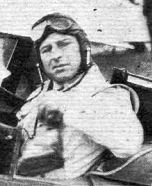
b 25 Jan 1912 in Chelsea, London. His parents (American-born Arthur Bertram Randolph and Enid Saffron Pickersgill-Cunliffe) had made the society pages when they had a 'best girl' as well as a best man at their wedding in 1908. However, his father was killed in WWI, his mother remarried (becoming Saffron Duberly, and 'lady of the manor' in St Neots) and in 1924 she and Mr Duberly sailed off to Jamaica, leaving the 12-year-old Patrick to go with his aunt Adelaide to the USA, presumably to visit family (his grandfather Arthur Randolph Randolph had emigrated and died there in 1885). It seems that Patrick subsequently lived with his aunt Adelaide and her husband Lionel in Dorset - he always quoted their address as his own, and again visited the USA with her in 1935. In December of 1933, he and fellow-officer Capt Goschen flew (in Pat's Percival Gull) to Egypt to take up an appointment at the Flying School for 2 years. Whilst there, he took part in the 'Oases Circuit Air Race' along with 31 others from Britain, France, Germany, Italy, Jugoslavia, Sweden and Belgium. He "sportingly flew up for the race round the Isle of Man in 1936 during 48 hours leave and flew back the same night". He took part in several other races, e.g. the Folkestone Air Trophy in August 1933; the London-Cardiff Race in 1936, and the Manx Air Race in June 1937. He entered for the Schlesinger Race in 1936 (as co-pilot to Lt Misri Chand) but the aeroplane wasn't ready in time. He owned 4 aeroplanes: - G-AACV, a 1928 Avro Avian IVM; - G-ACJW, a 1933 Percival Gull which was sold in Australia in 1934 and became VH-UTC; - G-ACUL, a 1934 Gull Six (sold in New Zealand, becoming ZK-AES), and finally - G-AEKD, a 1936 Vega Gull. It was this aircraft in which he was killed in a crash in Jaipur, India on 12 October 1937, aged 25. P Q Reiss (q.v) was also seriously injured in the same accident. A few weeks before his death, he and his uncle-in-law Lionel had been the joint executors for the will of his father's half-brother, Judge Joseph Randolph J.P., selling Eastcourt Estate ('A Georgian house with 484 acres, garages, stabling, and 9 cottages'). (His mother Saffron's son by her second marriage was also killed, in WWII. Her second husband died in 1951; she herself died in 1980). |
||
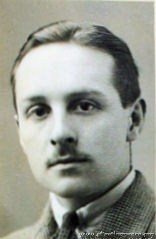 1933, when 2nd Lieut in the Grenadier Guards, aged 20.
.jpg) in 1936
in 1936
- Details
- Hits: 3041
| Mr Michael David Llewellyn Scott | ||
|
|
|
|
|
b. 12 Sep 1906 in Eton, Bucks. B.A. Cantab. and an 'Old Uppinghamian'. In 1930, a solicitor from Stoke Poges, if you hadn't already guessed :-), and, for a while, v. famous in the Skegness area... In 1930, after competing in the King's Cup, he crashed near Skegness when the wheels of his D.H.60X Moth G-EBXG caught a wire fence. He jumped clear, but his mechanic (Howard), who was still strapped in, was 'injured about the head'. May 1932, he had a terrifying ordeal (a bit like General and Mrs Lewin in the Sudan swamps, but even worse) in the remote reaches of The Wash; "CRIPPLED 'PLANE ON SANDBANK SET ON FIRE TO ATTRACT ATTENTION - HULL TRADER TO RESCUE" "Captain (sic) M. D. L. Scott, secretary of the Skegness Aero Club, was flying with a passenger named Tingall, from Skegness to Hunstanton, when his 'plane developed engine trouble. They were about halfway across the Wash, and he was compelled to a make forced landing on a sandbank which was uncovered, as it was low tide... they made an effort to swim the five miles to shore, but the current proved too strong. They then tried to attract attention by setting fire to the 'plane. Later the flames were noticed by a small cargo boat named Lizzie and Annie, which came alongside and took Captain Scott and his passenger on board. " Only just in time, too - the tide was rising fast... only the engine of the aeroplane remained unburnt ... Gosh! By 1933, he was offering to take sun-starved midlanders to be braced up a bit in Skegness; 25 bob return from Nottingham or Leicester, 35 shillings from Birmingham: "Nottingham people will be able to fly to Skegness again this summer at fares which will actually be cheaper than the first-class railway rates. This enterprising venture, which was inaugurated last year, is to be resumed again at Easter on a very much bigger scale... The service is to be conducted Mr. M. D. L. Scott, of Eastern Air Services, Skegness". The Eastern Air Transport Company carried 30,000 passengers in the 4 years to 1933 without serious incident. In November 1934, the Western Daily Press reported thus: "FOUND: AN AEROPLANE. A police constable, while on duty in Pinner, Middlesex, yesterday, found a monoplane in a field. No one seemed to know how the monoplane got there, and the constable began to make inquiries. The machine appeared to be a privately owned one, and was in good condition save for some slight damage to the undercarriage. The monoplane bore the marks G-AAPY and inscribed inside the fuselage was the name "M. D. L. Scott, Skegness." Further inquiries by the officer among the farm hands and the owner of the farm, Mr Hall, showed that someone saw an aeroplane land in a field on Wednesday afternoon. From that time until the constable discovered it yesterday it has been completely unattended, and, far as the police know, unclaimed. A Mr L. Scott, an airman, operates a private aerodrome and club at Winthorpe, a mile or so from Skegness. Pinner police were last night in communication with the police at Skegness." [G-AAPY was a Desoutter I, belonging to Michael. It was, indeed, written off in November 1934.) He then turned to golf in the late 30s - winner of the 'Witt Cup' in 1938. Married firstly to Marguerite; their son, Roderick, was born in December 1943. By then, he was a Flt-Lt (RAF Volunteer Reserve) in Oxford. However, by 1948, when he married Miss Patricia Collette Thomas (from Bude, Cornwall) in Zurich, they lived at 400 East 57th St, New York. Describing himself as a 'Sales Manager', he travelled (first class) from Durban to Southampton in February 1959, intending to stay a couple of months with the Duke of Somerset, Maiden Bradley, Wiltshire. Like you do. |
||
 1930, aged 24
- Details
- Hits: 2580
| Flt-Lt Frank Ormond 'Mongoose' Soden DFC | ||
|
|
|
|
|
b. 3 Nov 1895, Petitcodiac NB, Canada British Army 1914-16; RAF 1916-1945; WWI ace (27 victories) Founding Member of the British Parachute Association in 1926 Author of 'Parachutes' (RAeS), Oct 1927 2nd place (Moth G-EBOU, 95½ mph) in Wakefield Light Aeroplane Handicap (£15) & 2nd place (Moth G-EBOU, 95 mph) in President's Cup Race (£15), Hants Air Pageant, Avro Aerodrome, Hamble, 28 May 1928 Station Commander at Biggin Hill in WWII Later emigrated to Kenya d. 12 Feb 1961 - London
Research: thanks to Steve Brew |
||
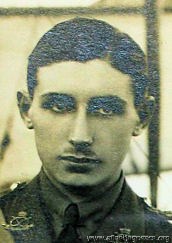 1916, when a Lieutenant in the 8th South Staffordshire Regiment, aged 21
- Details
- Hits: 9774
|
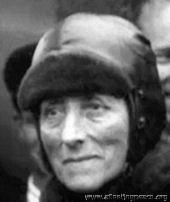
Mary du Caurroy Tribe, Duchess of Bedford
|
||
| b. Mary du Caurroy Tribe in 1865 in Stockbridge Hants, the second daughter of the Rev. W H Tribe; he later became Archdeacon of Lahore and (after growing up in Sussex, where she and her elder sister Zoe were looked after by their uncle and aunt), she lived there for several years. It was in Lahore that she met, and married, Lord Herbrand Russell, who in 1888 became the 11th Duke of Bedford.
She was probably best known as an aviator, but had several other strings to her bow; she was a member of the Society of Radiographers, and was "interested in natural history, especially ornithology". To prove this, she once shot 200 pheasants in a day and (although presumably not the same day) caught 18 salmon weighing 200lb. Actually, she wrote scientific papers on ornithology, and was a member of the British Ornitholgists' Union. She was deaf (I'm not sure if this was always true, or if it developed later on in life). During WWI, Woburn Abbey was turned into a hospital and every morning the Duchess would "go on duty at 5 or 6am, and in her nurse's dress would assist at nearly every operation." The King was pleased to award her the 'Royal Red Cross, in recognition of her valuable nursing services', in Jan 1918. Her personal pilots included C D Barnard, James Allen and (from 1934) R C Preston, but she herself learned to fly in 1933. Dame Mary from 1928. She owned: a 1927 DH.60X Moth, G-EBRI; the 1927 Fokker F.VIIa, G-EBTS, 'The Spider', in which she broke the England-Cape Town record in 1930; a 1928 DH.60G Gipsy Moth (G-AAAO); later she owned a 1931 DH.80A Puss Moth, G-ABOC, later sold in Kenya, a 1932 DH.60G Gipsy Moth, G-ABXR, a 1933 GAL ST.4 Monospar 2 G-ACKT, registered in October, in which her personal pilot, James Bernard Allen, was killed in December 1933, and finally a 1934 D.H.60G Moth G-ACUR in which she flew out over the North Sea in March 1937 ... ... and disappeared. |